All Categories
Featured
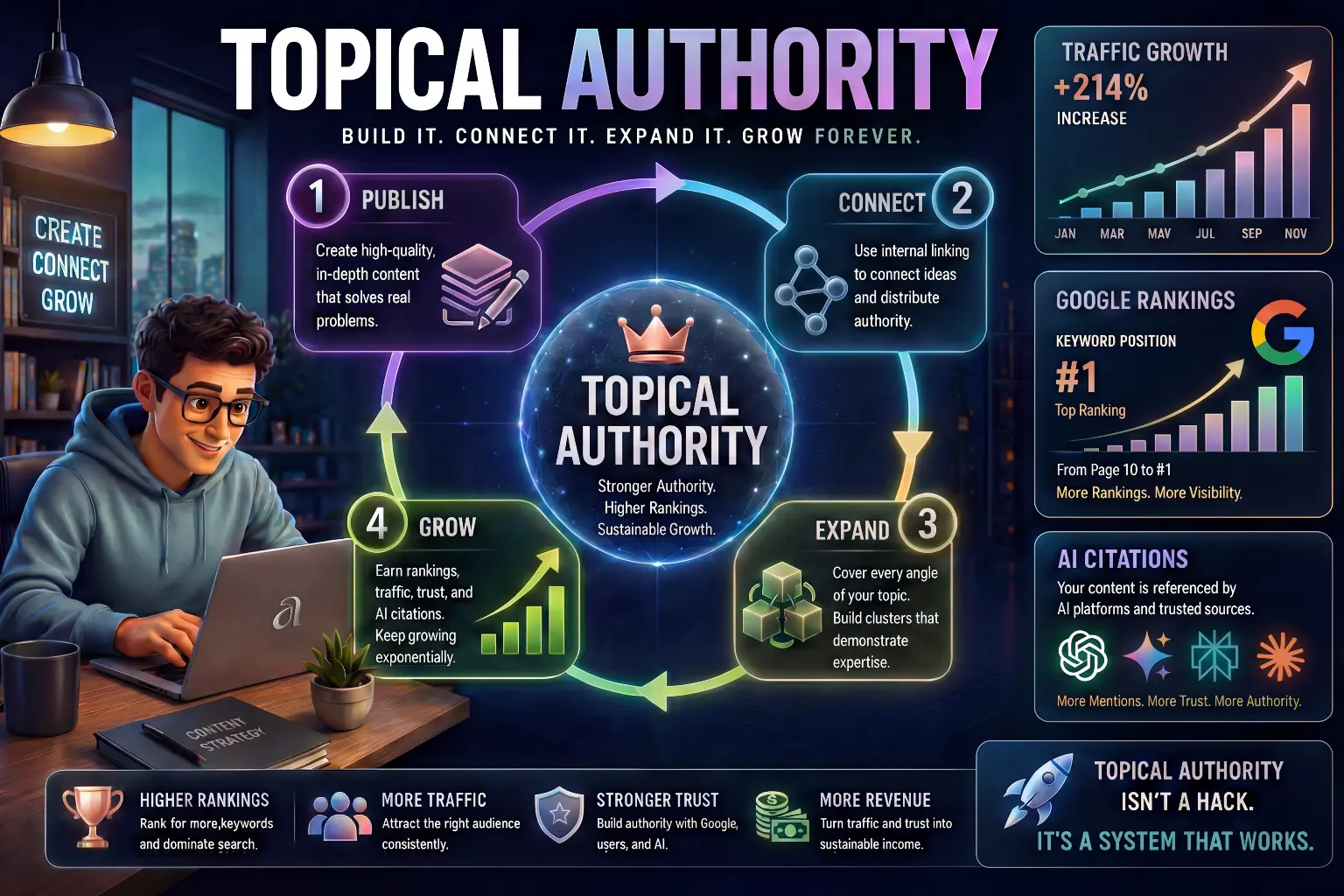

Mastering Automated Content Strategies for Business
"You'll see a tree diagram consisting of questions that Google users who searched your topic likewise asked: Click on any of these to check out more follow-up questions and utilize the most pertinent ones to inspire your content.: Here are some tools that can help you determine your site's credibility and proficiency in a subject area: Semrush's Topical Authority metric can help you determine how credibility your website has for particular search terms." There will be a ranking of"Low,"" Moderate, ""Appropriate, "or" High"under the "Topical Authority"label."Near the top of the page, you'll see"Referring Domains"( the number of domains that point back to your website)and"Backlinks" (the overall number of backlinks pointing to your site ).
YouTube Optimization for Service Businesses: The circulation of your referring domains by Authority Scores. Include the search engine, device, place, and language that you want to track positions for. They must consist of the search terms that you want to build topical authority around.
Scroll down to see the top-performing keywords for your domain and keywords for which your domain's visibility has increased ("Positive Effect ")and decreased(" Unfavorable Effect") in the picked period. To see whether you're developing topical authority. Compare your ranking positions before and after the content was published. You can change your chosen time duration using the button at the leading right of the report.
Future-Proofing Your Search Authority With AI
If you see positive boosts in ranking positions, you're most likely building topical authority in those subject areas. Prioritize building topical authority with your material to develop unstoppable.
momentum. Google works by determining and categorizing entities, so if your (individual) brand is categorized in a relevant category, you're one step more detailed to becoming a topical authority.
However there are also excellent factors that Google takes a look at the material and authorship when determining topical authority: Topical authority is not a brand-new concept. It's made up of several authority signature entries. The patent keeps in mind that the objective is "to determine users with proficiency in specific subjects." The patent also explores the possibility of how a series of files can add to the" Authority Signature Value"of their author. The authority signature value collects the author's weighted authorship on a topic across numerous files they have authored. It's still revealing to understand that Google has been offering this "authorship "data rather some believed for a very long time. Searching Google will help you comprehend topical authority even better. From Understanding Panels to extra areas like"Articles"and "About, "you'll have a much better idea of topical authority with the results standing for branded searches: Google's brand-driven image search is also helpful in comprehending how Google categorizes any brand: Now, let's get to some actionable ideas here( I hope you got down here to discover it, however all the dull things above is necessary to understand what we require to do to construct topical authority). Enough for you to have time and resources to format it well, surface it efficientlyon your website, and market it effectively to get other crucial signals(like links and engagements). This sounds old, however it remains important. From everything I mentioned above, it's apparent that Google assigns topical authority based on the authoritativeness of the resource. Do not make it about amount, however. Concentrate on widely known authoritative resources. If Google comprehends one thing well it's entities and how these are connected. Being mentioned by other entities suggests entering into Google's Knowledge base, that is, its map of the world. However this isn't a simple process. You'll need to take a couple of steps, consisting of: Get chosen and win market awards. Compose for well-known industry publications(this is what I am doing here, for example )Participate in interviews(appearing in podcasts is likewise great ). Get prominent publications to mention your material (invest in premium journalistic outreach ). End up being part of professional organizations(and discuss that on your site ). Whatever you do will eventually-straight or indirectly -assist you develop yourself as a topical authority. All of these will add to your becoming an entity, one step at a time. Schema helps Google connect all the dots. Google supports simply a couple of schema types however it mentions often times:"Go beyond those."Usage Schema to connect to your authorities channels, markup your authorship, and include your locations of know-how. Start by setting up a to inform Google a bit more about your brand name and know-how.

Latest Posts
Structuring Content Hubs Using AI Tools

Increasing Brand Trust in the Modern Market

Developing Automated Content Strategies for 2026