All Categories
Featured
Leveraging AI Writing for Enterprise Visibility
: The distribution of your referring domains by Authority Scores. Include the search engine, device, area, and language that you want to track positions for. They ought to include the search terms that you want to construct topical authority around.
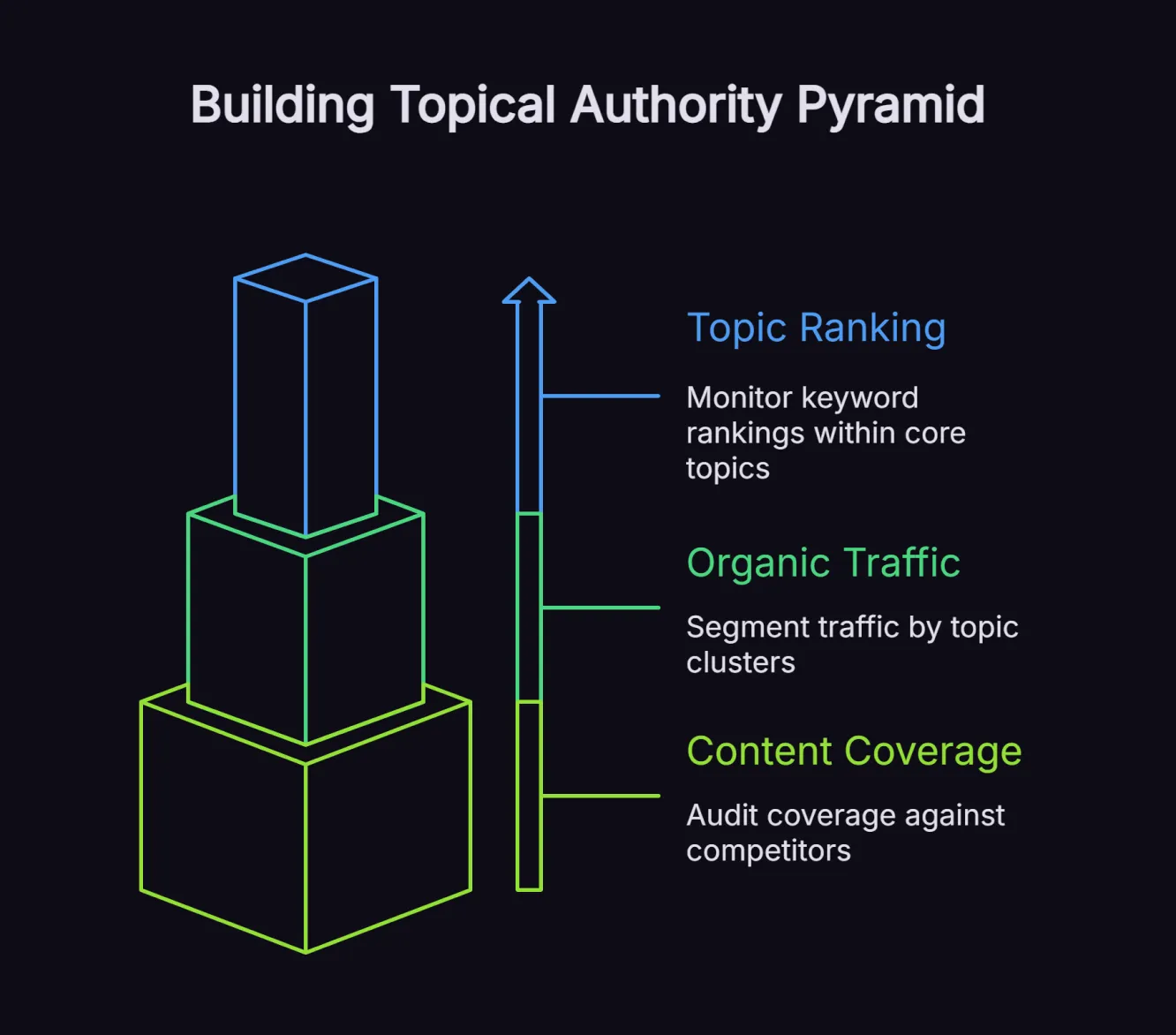
Scroll down to see the top-performing keywords for your domain and keywords for which your domain's presence has actually increased ("Positive Impact ")and decreased(" Unfavorable Effect") in the picked period. To see whether you're developing topical authority. Then, compare your ranking positions before and after the material was released. You can change your picked period using the button on top right of the report.
If you see favorable increases in ranking positions, you're likely building topical authority in those topic locations. Log in to Google Analytics( GA4 )to see whether check outs are up or downFrom the control panel, click ""in the top left corner. Then, go to "" >""> "."There, you'll see a breakdown of your traffic by channel. Take a look at the" Organic Browse "row and compare the information to what you saw from the previous duration. Prioritize structure topical authority with your content to construct unstoppable.
Architecting Scalable Authority Systems With AI
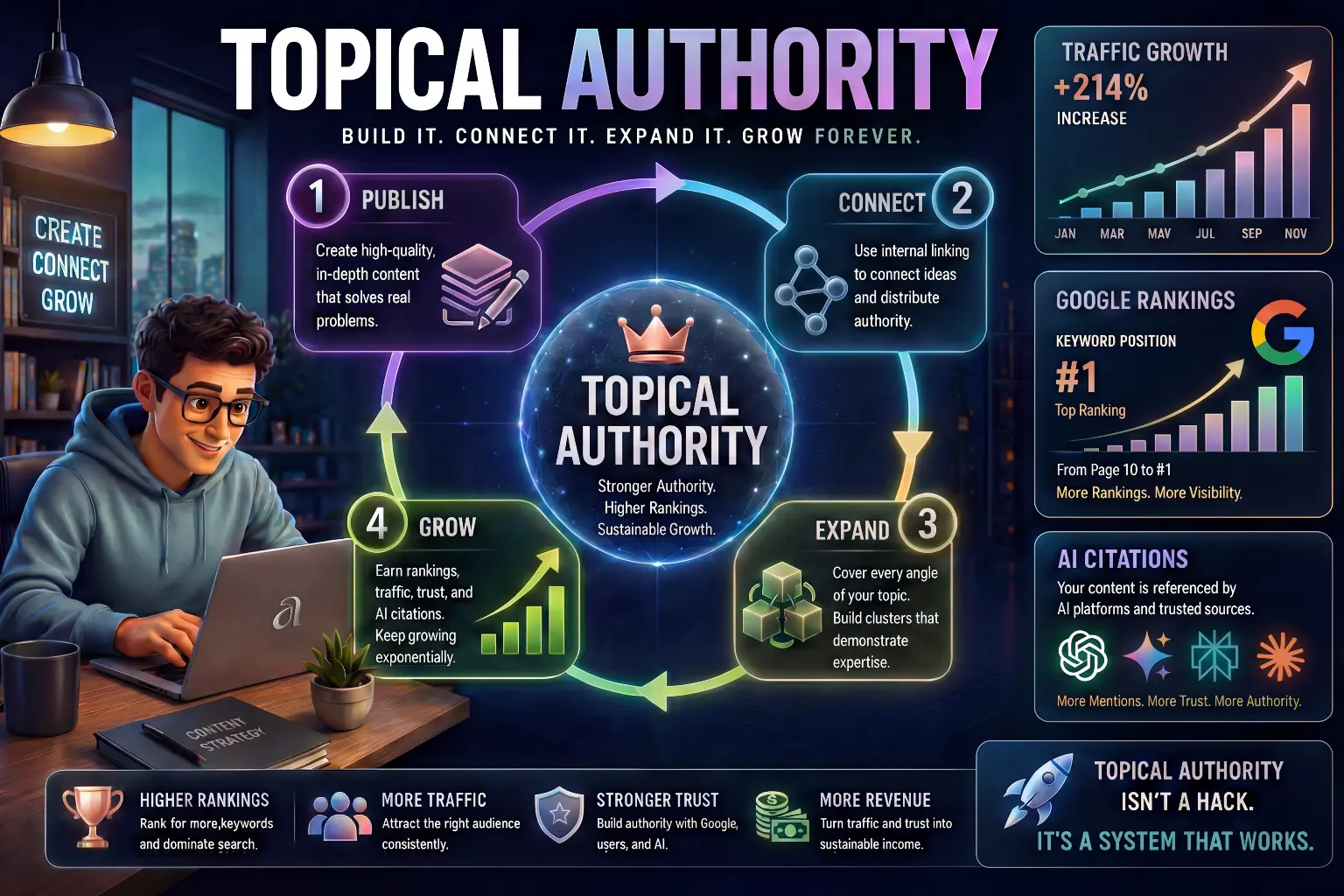
momentum. And use Semrush's AI-powered keyword tools to get a better understanding of your site's topical authority for your target search terms. So you can pursue the ideal terms to increase your reliability. Have a look at the tools noted in this post with a complimentary trial. If you have actually been in SEO long enough, you know that Google has actually been attempting to determine real proficiency behind web documents for several years. From the stopped working "Authorship"job to its E-E-A-T guidelines, we have lots of proof of that battle. This is where the term" "comes from, and here's what you require to learn about it: As the term suggests, topical authority means the go-to resource for or a popular specialist on (or both)a particular subject . I tend to think it's both since one can strengthen the other. Google works by identifying and classifying entities, so if your (individual) brand is categorized in a pertinent classification, you're one step more detailed to becoming a topical authority. To show this point, this is the requirements utilizes to determine and interpret topical authority for each story:" How significant a source is for a subject or area "(This is the entity category)."... a source's history of top quality reporting, or suggestions from professional sources, such as professional societies [and] journalistic awards"(These are recommendations from other connections from other entities Google understands about).
There are likewise excellent reasons that Google looks at the content and authorship when recognizing topical authority: Topical authority is not a brand-new principle. Searching Google will assist you understand topical authority even much better. From Understanding Panels to extra areas like"Articles"and "About, "you'll have a better concept of topical authority with the results appearing for branded searches: Google's brand-driven image search is also handy in comprehending how Google categorizes any brand name: Now, let's get to some actionable tips here( I hope you got down here to discover it, however all the dull stuff above is essential to understand what we need to do to build topical authority).
The more authoritative material associated with a brand name, the higher the topical authority. Even sites with low Domain Authority (DA)canoutperform those outshine higher DA if they excel in topical authority. By analyzing these effective articles, you can create content that meets or exceeds surpasses standardsRequirements thereby thus your topical authority in the eyes of search engines.

Latest Posts
Structuring Content Hubs Using AI Tools

Increasing Brand Trust in the Modern Market

Developing Automated Content Strategies for 2026