All Categories
Featured
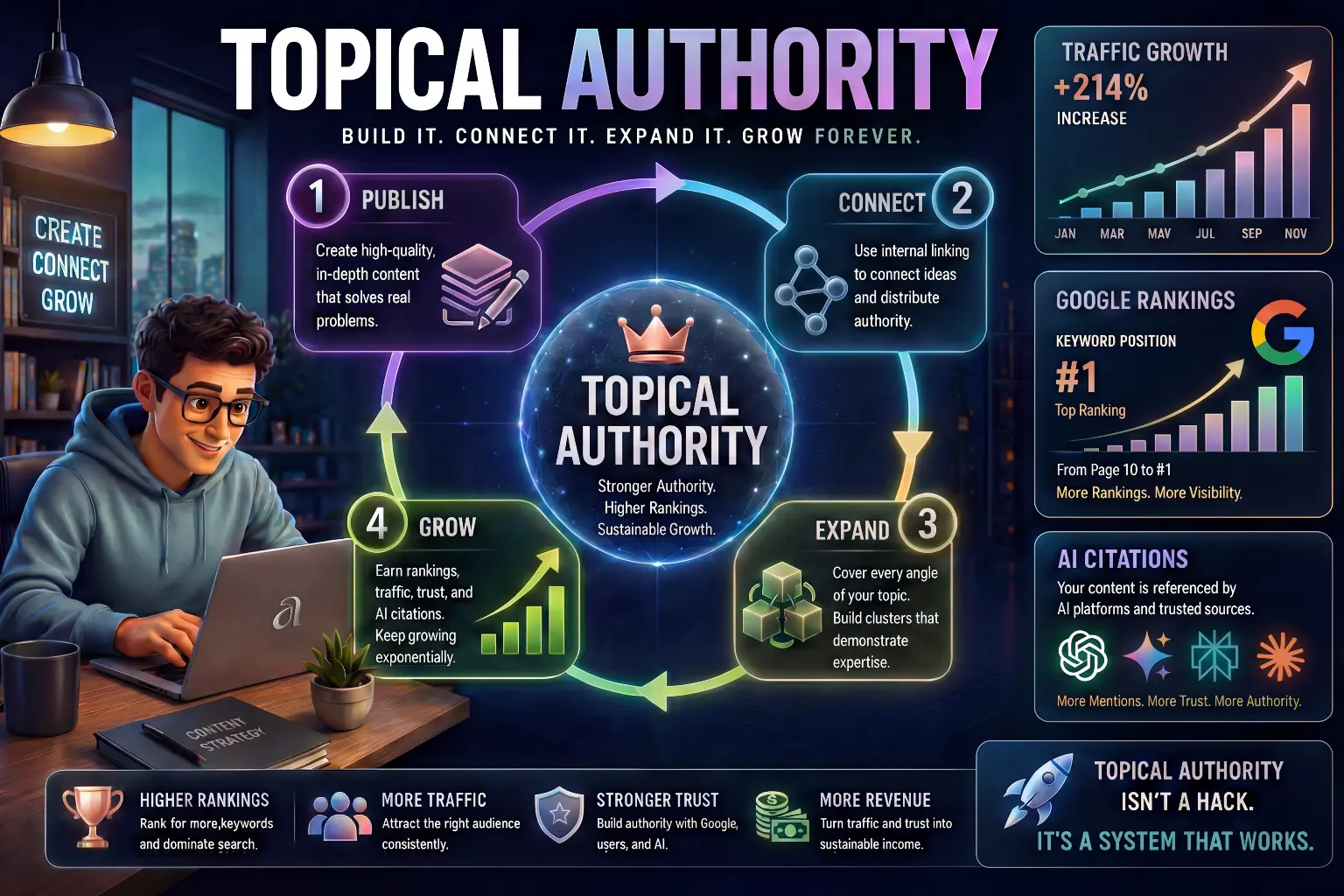
Establishing Topical Authority Within 2026 Systems
You can also check domain authority with our complimentary website authority checker. The full Backlinks report also includes a wealth of useful data, like: "": The primary subject areas of the sites linking to yours." ": The leading anchor text of your backlinks. Google uses anchor text to comprehend what your webpages are about."": The circulation of your referring domains by Authority Ratings. Backlinks from more reliable websites are typically more important ."": How backlink appears on the page(image, text, and so on). Text backlinks are generally more valuable for SEO. So, monitor your positions for target keywords. If you're getting visibility for a few associated terms, it might be a sign you're developing trust around that subject. Semrush's Position Tracking tool makes tracking your ranking positions for keywords easy. Enter your domain and click"." Next, configure your settings. Consist of the search engine, device, place, and language that you want to track positions for. They should include the search terms that you want to construct topical authority around. And click"."Select whether you wish to get weekly e-mail updates on your keyword positions. Then, click "."After opening the report, you'll arrive at the"Landscape" tab.
To see whether you're developing topical authority. Compare your ranking positions before and after the material was published.
If you see favorable boosts in ranking positions, you're likely structure topical authority in those topic locations. Visit to Google Analytics( GA4 )to see whether visits are up or downFrom the control panel, click ""in the top left corner. Then, go to "" >""> "."There, you'll see a breakdown of your traffic by channel. Take a look at the" Organic Search "row and compare the data to what you saw from the previous period. Prioritize building topical authority with your material to develop unstoppable.
Strategic Tips for Automated Content Success
momentum. And use Semrush's AI-powered keyword tools to get a much better understanding of your website's topical authority for your target search terms. You can go after the ideal terms to enhance your reliability. Check out the tools listed in this short article with a totally free trial. If you've been in SEO long enough, you know that Google has been attempting to find out real competence behind web documents for many years. From the stopped working "Authorship"task to its E-E-A-T guidelines, we have great deals of proof of that fight. This is where the term" "stems from, and here's what you require to know about it: As the term recommends, topical authority means the go-to resource for or a well-known expert on (or both)a specific topic . I tend to think it's both due to the fact that one can reinforce the other. Google works by recognizing and categorizing entities, so if your (personal) brand is classified in a pertinent classification, you're one step closer to becoming a topical authority. To prove this point, this is the requirements utilizes to determine and analyze topical authority for each story:" How significant a source is for a subject or location "(This is the entity category)."... a source's history of top quality reporting, or recommendations from professional sources, such as expert societies [and] journalistic awards"(These are references from other connections from other entities Google learns about).
There are likewise good reasons that Google looks at the material and authorship when determining topical authority: Topical authority is not a new principle. It's comprised of one or more authority signature entries. The patent notes that the objective is "to identify users with know-how in particular topics." The patent likewise checks out the possibility of how a series of documents can add to the" Authority Signature Value"of their author. The authority signature worth accumulates the author's weighted authorship on a subject throughout multiple files they have actually authored. It's still exposing to understand that Google has actually been offering this "authorship "data quite some believed for a long time. Searching Google will help you understand topical authority even much better. From Knowledge Panels to additional sections like"Articles"and "About, "you'll have a better concept of topical authority with the outcomes standing for branded searches: Google's brand-driven image search is likewise helpful in comprehending how Google categorizes any brand name: Now, let's get to some actionable tips here( I hope you got down here to find it, however all the boring things above is essential to comprehend what we require to do to construct topical authority). Enough for you to have time and resources to format it well, surface area it efficientlyon your site, and market it successfully to acquire other crucial signals(like links and engagements). This sounds old, but it remains crucial. From everything I mentioned above, it's apparent that Google designates topical authority based on the authoritativeness of the resource. Don't make it about quantity, though. Concentrate on widely known reliable resources. If Google understands one thing well it's entities and how these are connected. Being pointed out by other entities implies entering into Google's Understanding base, that is, its map of the world. This isn't a simple procedure. You'll require to take a couple of steps, consisting of: Get nominated and win market awards. Write for popular industry publications(this is what I am doing here, for instance )Participate in interviews(appearing in podcasts is also fantastic ). Get prominent publications to mention your material (buy top quality journalistic outreach ). Enter into expert companies(and mention that on your website ). Whatever you do will ultimately-directly or indirectly -help you develop yourself as a topical authority. All of these will add to your becoming an entity, one action at a time. Schema assists Google connect all the dots. Google supports simply a few schema types but it mentions often times:"Surpass those."Usage Schema to connect to your authorities channels, markup your authorship, and include your locations of expertise. Start by setting up a to inform Google a bit more about your brand name and know-how.
describes being a go-to resource or specialist on a specific topic. It can apply to a website's proficiency on a topic or a person's competence. Google has long tried determining topical authorities through initiatives like authorship markup and patents on computing "authority signature worths. "Topical authority impacts things like Google's understanding panels, search results page rankings, and brand-driven searches. The more reliable content related to a brand, the higher the topical authority. Are you thinking about discovering topical authority to improve your search engine rankings? While it might initially appear complicated, nailing topical authority significantly enhances your site's efficiency. Basically, it includes developing your site as a relied on resource on particular topics. When you attain this, online search engine like Google are more most likely to rank your website greater. These are the points we'll cover: ExactMetrics is the very best WordPress Analytics plugin. Get it for free! Topical authority indicates positioning yourself as a specialist in a specific discipline. When your website offers thorough and important details on a specific subject, online search engine view it as a reputable source, which assists your website rank better in search results. By sharing detailed articles on numerous cleansing techniques, suggestions for taking on various kinds of stains, seasonal cleaning guidance, and services for typical household cleaning issues, your website can end up being a preferred location for cleaning enthusiasts. Search engines acknowledge that your site thoroughly covers numerous cleansing subjects, which results in higher rankings when users browse for related info. This is especially advantageous if you run a small service or website. Even sites with low Domain Authority (DA)can.
AI Search Visibility Strategy
surpass those with greater DA if they master topical authority. A small cooking blog using in-depth recipes, cooking suggestions, and dietary recommendations can outrank a larger website with only standard recipes. If your material is helpful and engaging, visitors will remain on your website longer, suggesting to online search engine that your site holds worth. Next, let's look into how Google ranks sites and their latest updates. Google utilizes several criteria to identify your site's ranking. Aspects such as premium content, fast loading speeds, mobile friendliness, and a total positive user experience play essential functions. One considerable aspect to think about is Google's newest handy content updates. These updates are developed to highlight material that is helpful, informative, and directly appropriate to users 'search questions. If your content satisfies these requirements and genuinely helps users, it is more most likely to achieve a higher ranking. E-A-T, which means,, and, is another critical ranking aspect. Here's what we'll cover: Performing keyword research is foundational to building topical authority. Before writing content, it's vital to understand what your audience is searching for. Consider your audience's interests. What concerns do they have? What information are they looking for? Your objective is to supply extensive protection of all this. This is a broad term that encapsulates your whole topic. If your subject is"home exercises, "a good seed keyword might be "novice workout routines. " Prevent terms that are too generic, like"physical fitness, "or extremely particular, like"yoga presents for lower neck and back pain."After picking a seed keyword, widen your list of associated topics. Enter your broad topic. Look at the suggested filters. These often offer associated ideas worth exploring. For instance, see what happens when you key in"baking recipes"Why not consider focusing on simple or no-bake cake recipes with few components? You can even do a seasonal series for summertime, winter, and fall or" Fun Halloween Cake Recipes. "For more thorough keyword research study, we recommendusing a tool like Semrush . In addition, take a look at the posts that rank well for your picked keywords. Study these top-ranking short articles to understand what they cover, how they structure their content, and how they utilize headings. This insight exposes what both Google and users expect when looking for these terms. By evaluating these successful articles, you can develop material that fulfills or surpasses these standards, thereby building your topical authority in the eyes of search engines. To establish strong topical authority, you should produce a content cluster. This includes developing a mix of pillar articles(likewise known as foundation material )and supporting short articles that are interlinked. These are substantial, detailed pieces that cover a broad subject thorough. They serve as the main centers of your material cluster. In the world of individual financing, supporting articles might include "How to Create a Budget,""Understanding Credit Ratings, "and"Tips for Conserving Money. " Take a look at our extensive tutorial on Cornerstone Material for SEO: What It Is & How to Produce It for more insights. Organizing your content into clusters results in a well-structured, interconnected information web. The number of short articles do you need to write to create a reliable content cluster? There's no fixed number, however a great indication is when your brand-new material on a topic starts ranking quickly. That's an indication you have actually developed topical authority. Protecting backlinks is one of the most difficult aspects of SEO. There are efficient techniques to get top quality backlinks. Here are some actionable pointers: Write posts for other blogs and sites within your niche. This helps you tap into a more comprehensive audience and gets you valuable backlinks. The most organic way to acquire backlinks is by creating material that others want to link to.

Latest Posts
Structuring Content Hubs Using AI Tools

Increasing Brand Trust in the Modern Market

Developing Automated Content Strategies for 2026